TCM goes global
“When conventional medicine was at a loss... TCM helped me.” “When my doctors were at a loss, I found my way to TCM.” You often come across statements like these when you start to learn about traditional Chinese medicine. It quickly becomes clear that it is a wide variety of clinical pictures that are increasingly leading people all over the world to the traditional methods of this Far Eastern science. This is often preceded by a long period of suffering, at the end of which comes the realization that conventional Western medicine cannot provide relief or a cure
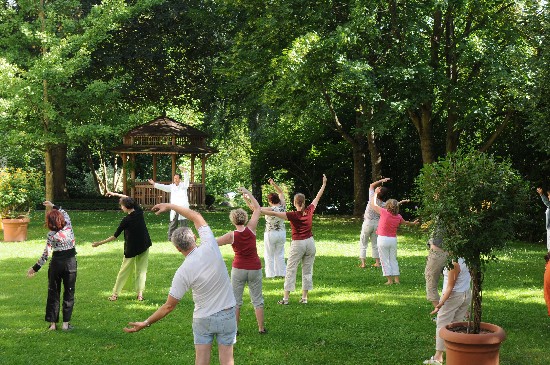
Healing through a holistic approach: The photo was taken in the garden of the TCM Clinic in Bad Kötzting.
“The building in Bad Kötzting doesn't really look like a clinic—it's much more like a hotel.” Ursula Wolf, born in 1944, knows what she's talking about. Twice already, she has found what conventional medicine failed to provide her at Germany's first TCM clinic. The athletic Franconian can now look back on a long journey of suffering.
Her odyssey began more than 15 years ago with a herniated disc in her lumbar spine – with extremely painful radiating pain down to her toes. The attending physician recommended surgery using laser technology, followed by wearing a support corset to stabilize the back area. The operation can certainly be described as successful – at least for the time being. However, a good nine months later, the pain returned and the journey through the medical system began again. All conventional attempts at treatment were unsuccessful. The pain was almost unbearable, and life without strong painkillers was no longer conceivable.
It was 1999. Bavarian television showed a portrait of an apparently completely new type of clinic that had recently opened in nearby Bad Kötzting in the Upper Palatinate district of Cham. According to the report, the clinic pursued a completely new concept with doctors and specialist staff, most of whom had been flown in directly from China. With the entire spectrum of Western conventional medicine as a backdrop, all problems were viewed from a holistic perspective based on traditional Chinese teachings.
“This is my chance,” thought Ursula Wolf, and without further ado, she asked her family doctor to refer her to the Kötzting clinic. Her inpatient stay lasted a full three weeks and included qigong, acupuncture, and tuina massage. The therapy was accompanied by a change in diet and the administration of various tea blends. Following her inpatient stay, Ms. Wolf continued the qigong exercises she had learned at home, and after a good three months, she felt virtually no pain at all—for a long time.
Her odyssey began more than 15 years ago with a herniated disc in her lumbar spine – with extremely painful radiating pain down to her toes. The attending physician recommended surgery using laser technology, followed by wearing a support corset to stabilize the back area. The operation can certainly be described as successful – at least for the time being. However, a good nine months later, the pain returned and the journey through the medical system began again. All conventional attempts at treatment were unsuccessful. The pain was almost unbearable, and life without strong painkillers was no longer conceivable.
It was 1999. Bavarian television showed a portrait of an apparently completely new type of clinic that had recently opened in nearby Bad Kötzting in the Upper Palatinate district of Cham. According to the report, the clinic pursued a completely new concept with doctors and specialist staff, most of whom had been flown in directly from China. With the entire spectrum of Western conventional medicine as a backdrop, all problems were viewed from a holistic perspective based on traditional Chinese teachings.
“This is my chance,” thought Ursula Wolf, and without further ado, she asked her family doctor to refer her to the Kötzting clinic. Her inpatient stay lasted a full three weeks and included qigong, acupuncture, and tuina massage. The therapy was accompanied by a change in diet and the administration of various tea blends. Following her inpatient stay, Ms. Wolf continued the qigong exercises she had learned at home, and after a good three months, she felt virtually no pain at all—for a long time.
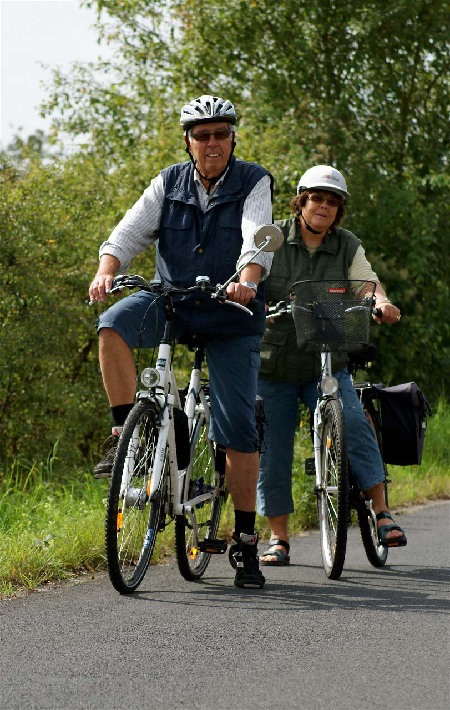
Successfully treated with TCM: Ursula Wolf enjoying one of her favorite hobbies—cycling
After twelve years, however, the familiar symptoms returned. And once again, he began the journey through the stages of Western conventional medicine—without any significant success and with all the negative side effects. After only a short time, the massive intake of high-dose painkillers led to serious damage to his liver and probably other internal organs as well. Severe depression was the inevitable consequence of this permanent and serious reduction in quality of life. As in 1999, conventional methods had failed once again. And as before, the TCM clinic came to the rescue. Using the same treatment methods, complete recovery was achieved once again after a short stay in hospital.
Ms. Wolf swears by the TCM clinic in Bad Kötzting. Joy and happiness instead of pain and suffering – completely without painkillers: today, the young-at-heart Franconian woman can once again participate actively in life. Every day she goes swimming in the nearby indoor pool and recently she bought herself a new, stylish bicycle.
Chinese medicine – what is it actually?
At first glance, traditional Chinese medicine (TCM) and Western medicine appear to be irreconcilable opposites in terms of concept and philosophy. Western medicine is characterized by continuous research into clinical pictures and their consequences. Doctors are increasingly becoming specialists in very narrowly defined areas of human physiology. Western medicine usually focuses on the treatment of disease symptoms. A holistic view is virtually non-existent. However, this is precisely where the TCM approach begins. The focus is on the human being as a whole, not the disease. Body, soul, spirit, and environment are the elements of a harmonious whole. Diseases arise when this harmony is disrupted. In order to make a diagnosis using such a universal approach, TCM requires special medical questioning methods. In comprehensive anamnesis interviews, it is the task of the physician to trace and analyze a disease through careful observation and active listening.
Zhōngyī (中医) means “Chinese medicine” in English. This is what the Chinese call their traditional collection of research and teachings about humans and health. In the Western world, we refer to TCM, or “Traditional Chinese Medicine.” This is actually a generalizing umbrella term that encompasses the entirety of the medical knowledge of the country's individual nationalities. This includes the medicine of the Han nationality as well as that of the Tibetans, Mongols, Uyghurs, etc. The most significant influence certainly comes from the Han, as the largest ethnic group with the longest history and the oldest written characters, but when viewed as a whole, Chinese medicine is, on closer inspection, a shared treasure trove of experience from all ethnic groups in the Middle Kingdom.
The history of Chinese medicine dates back to the Shang Dynasty (17th–11th century BC). Inscriptions on oracle bones and turtle shells that are nearly 3,000 years old attest to the origins of a scientific system in the Yellow River basin. As early as the early Zhou dynasty, the four diagnostic methods of observation, auscultation (attentive listening) and smelling, questioning, and pulse feeling and palpation (touching) were already known. The systematic use of medicinal herbs and the origins of acupuncture also date back to this early era.
The first written work on Chinese medicine is considered to be the “Huang Di Nei Jing,” which can be translated into English as “The Yellow Emperor's Classic of Internal Medicine.” It already refers to the complex interplay between human health, the course of the seasons, and the holistic principles of change of yin and yang. In contrast to our current symptom-centered medical concept, Chinese medicine has been based for thousands of years on a holistic view of harmony between heaven or nature and humans. The Huang Di Nei Jing focuses on the transformation and interaction between yin and yang in the course of the seasons. Spring is the time of birth, summer stands for growth and prosperity, autumn is the time of harvest, and winter is the phase of preservation and storage. Human existence and life as a tiny microcosm within the infinity of the universe require close alignment and constant harmony with the laws of nature and the changing seasons. Spring and summer correspond to the energetic principle of yang, while autumn and winter belong to yin. It is therefore important that people soak up as much sun as possible during the light seasons, in contrast to autumn and winter, because the energy of yang is the human counterpart to the radiant power of the sun. It is said that just as there can be no life on earth without the sun, human existence is not possible without the energy of Yang. According to the teachings of Chinese medicine, the energetic principle of Yang serves to invigorate and transport Qi, blood, and bodily fluids, as well as to build up defenses against possible diseases. In simple terms, the term “qi” could be translated as ‘power’ or “energy.” According to the teachings of the “Huang Di Nei Jing,” the highest principles for maintaining health include always eating and drinking in moderation, being physically active, and ensuring regular sleep patterns. It is particularly important never to eat until you are completely full, as this puts excessive strain on the digestive system – with negative consequences for overall physical health. Closely related to physical balance is the balance of the soul: cheerfulness, serenity, and inner peace are essential prerequisites for the health of the human mind.
Since its beginnings, Chinese medicine has been subject to a constant and continuous process of development. For example, magical elements, belief in spirits, incantations, and offerings have largely given way to the healing systems of corresponding medicine since the beginning of the Confucian era. In this context, the Yin-Yang doctrine and the theory of the five elements and phases of transformation from the book “Huang Di Nei Jing” became the basis of the newly developed system as an expression of the socio-political ideas of Confucian state doctrine. The five elements in traditional Chinese philosophy are wood, fire, earth, metal, and water. These are subject to a permanent dynamic that develops from a creative and destructive mutual relationship. In classical Chinese wisdom, the laws of nature and the environment can be derived from this, which is why these five basic elements are considered phases of transformation.
Further books were added over the centuries. Soon after the beginning of our calendar, for example, the “Shang Han Lun” appeared, an important standard work on the treatment of cold-related illnesses. Knowledge about the use of medicinal plants and herbs also grew continuously since the Qin and Han dynasties.
TCM on the road to modernity
In the 19th and early 20th centuries, traditional healing methods were greatly suppressed and in many cases replaced by Western medicine. Imperialist powers had taken control of Chinese territories from the second half of the 19th century onwards, which also allowed Western science and technology, as well as the Western spirit, to find their way into China. As a result, many Chinese people preferred to be treated by Western doctors rather than traditional Chinese doctors when they were ill. Chinese medicine was increasingly suppressed, and there were even considerations to ban it altogether.
The revolution and the founding of modern China brought about a decisive turning point. The founder of the state, Mao Zedong, recognized the potential of traditional Chinese medicine to provide functional medical care for the broad masses, especially in rural areas, with the limited financial resources that were available at the time. He said: “Chinese medicine and pharmacy are a great treasure trove. Efforts should be made to tap into them and raise their level.” Reforms and an intelligent combination of tradition with modern medical knowledge led to a genuine revaluation of traditional techniques. The rebirth of Chinese medicine after the founding of the state thus became the birth of what is now known as TCM.
The new Chinese government was not content with simply applying the findings of TCM to medical care for the people. Through research and innovation, Chinese medicine was to be expanded and at the same time freed from any remaining religious elements. Especially since the mid-1980s, Chinese medicine has experienced an upswing due to its connection with Western medicine. In today's China, TCM is closely linked to Western medicine. Students of traditional Chinese medicine are now taught Western medicine as well. All licensed Chinese medicine practitioners can and are allowed to prescribe Western medicines.
Nobel Prize for TCM researcher – The world discovers TCM
Its history goes back several thousand years, yet TCM has only really been known in Western culture for a few decades. Although European scholars first encountered Chinese medicine in the 17th and 18th centuries, it was completely forgotten again in the 19th and early 20th centuries. It was only after the founding of New China in the 1950s that the Western world began to take an interest in this complex subject again. A truly significant upswing in TCM was triggered by an article published in the New York Times in 1971, in which American journalist James Reston reported how his pain after an appendectomy had been successfully treated with acupuncture.
The international community has now become well aware of the special advantages of TCM. According to statistics from the World Health Organization (WHO), traditional Chinese medicine is now used in over 170 countries and regions around the world, and acupuncture is used as a healing method in more than 100 countries. Worldwide, more than 300,000 medical professionals work in over 80,000 TCM institutions using Chinese healing methods, and more than 80 countries have signed cooperation agreements with the Chinese government in the field of TCM.
TCM received a particular boost last year when the Nobel Prize for Medicine was awarded to Chinese pharmacologist and TCM researcher Tu Youyou. The scientist herself could hardly believe it when she heard on television that the Swedish committee had announced that her life's work in researching artemisinin, an active ingredient in malaria treatment, would be honored with the Nobel Prize.
Born in Ningbo in the eastern Chinese province of Zhejiang in 1930, Tu Youyou studied at the Faculty of Pharmacy at Beijing Medical University from 1951 to 1955. After graduating, she worked at the Institute of Materia Medica of the Chinese Academy of Traditional Chinese Medicine (TCM), where she took over the management of a Chinese government project to research active ingredients for the treatment of malaria in 1969. The researchers examined the effectiveness of some 200 herbs and countless herbal recipes used in TCM, and in 1972, Ms. Tu finally succeeded in isolating the substance artemisinin, an active ingredient against malaria, from the annual mugwort (Artemisia annua).
In a recent interview, Tu Youyou explained that whether or not she wins the Nobel Prize is not the central issue for her. More important, she said, is “that there will be a new surge of motivation so that TCM research can continue to produce valuable results and significant advances in healthcare can be achieved.” This would indeed be desirable. It is already certain that Ms. Tu has rendered an invaluable service to humanity, especially in Third World countries, with her research.
TCM in German-speaking countries
Traditional Chinese medicine is now also quite widespread in German-speaking countries. As early as 1951, the “German Medical Association for Acupuncture” was founded as the first acupuncture association in the German-speaking world, with other organizations to follow. Although TCM is becoming increasingly popular in Germany, it has not yet been fully recognized in health policy. It is encouraging that acupuncture has now been included in the catalog of services covered by health insurance for chronic pain in the lumbar spine and knee joint.
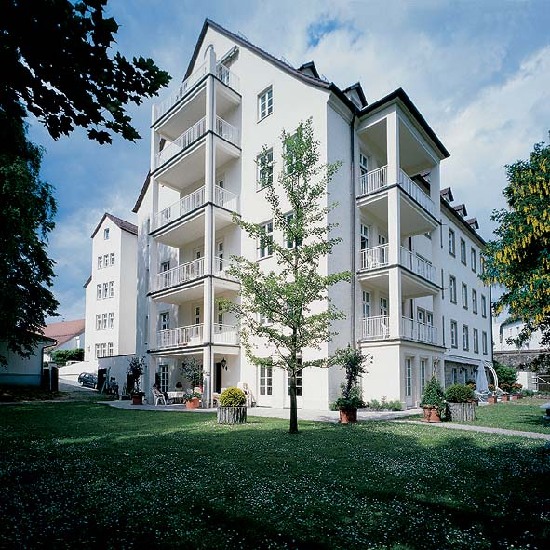
Often the last hope for many patients who have suffered for a long time – the TCM Clinic in Bad Kötzting
The situation in Switzerland and Austria is comparable to that in Germany. TCM is also becoming increasingly popular in these two countries. Austrian doctors can now obtain a diploma in “Chinese Diagnostics and Drug Therapy” from the Austrian Medical Association, which requires additional training lasting at least two years and comprising a good 500 training hours.
In Germany, a “Bachelor of Medicine (TCM) China” degree program has been available since January 2016. With the founding of the TCM Academy Cologne in 2011, it is now possible to pursue postgraduate studies in Chinese medicine (part-time) at an international academic level in Germany. A master's degree program has also been offered in Cologne since 2011, with the first eight students graduating in 2014. In this context, renowned professors from Zhejiang Chinese Medical University (ZCMU) in Hangzhou come to Germany. The program also includes regular teaching stays in Hangzhou as well as lectures, seminars, and webinars in Germany. According to its own information, the TCM Academy Cologne works closely with ZCMU and supports it in planning and implementing the master's and doctoral programs in Germany.
When you consider that in the 1970s there were only a handful of specialists teaching Chinese medicine and that at that time they were all too often ridiculed as “miracle healers” and their medicine dismissed as “voodoo magic,” it becomes clear how much attitudes have changed in the meantime. Over the past 20 years, traditional Chinese medicine (TCM) has experienced a Europe-wide upswing, and from today's perspective, the road to general recognition should no longer be too long and rocky.
It was in August 1991 when Anton Staudinger launched a project in Bad Kötzting, Bavaria, that had been unimaginable until then: the first clinic for traditional Chinese medicine on German soil. The TCM Clinic Bad Kötzting is a joint project between the University of Chinese Medicine in Beijing and its affiliated Dongzhimen Clinic, combining conventional medicine and TCM. Western conventional medicine and traditional Chinese methods go hand in hand here, complementing each other in a way that was previously unimaginable in Germany. The Bad Kötzting clinic is celebrating its 25th anniversary this year. Despite all the initial difficulties and growing pains, especially with regard to approval and recognition, the Bad Kötzting TCM clinic has been an extremely successful project. To date, it is the only clinic of its kind in Germany whose treatment costs are covered by statutory health insurance. Anyone familiar with the complicated process of obtaining cost coverage from statutory health insurance companies in Germany knows what an outstanding success this is.
For many people, Bad Kötzting is often the last hope after a long and seemingly hopeless ordeal. Time and again, patients report that the clinic's combined methods have given them new perspectives on life. In addition to acupuncture and moxibustion (heating specific points on the body), the clinic also offers psychotherapy and Chinese medicine, Tuina massage, Qigong, nutritional counseling, and physical therapy. The fact that TCM is now well known in Germany and enjoys a high reputation among many people is certainly due in large part to the Kötzting clinic.
TCM is a science that now connects peoples, brings together seemingly very different cultures, and gives hope and confidence to many people in often seemingly hopeless situations. It remains exciting. What will the next few years bring? China's good relations with European countries, especially Germany, will certainly help to further develop the spread of Chinese medicine in our country as well as in other Western countries. Meanwhile, the clinic in Bad Kötzting, Bavaria, is no longer alone. Other TCM clinics have been opened, including in Illertissen, Steigerwald, Konstanz, Heidelberg, and Essen. It is to be hoped that the example set by Bad Kötzting will catch on and that there will soon be many more projects of this kind in Germany and around the world.
Published in “China Today” – February