2004 - Year of Czech Music - The Moldau
Which musical work by a Czech artist has made a particularly strong impression on me? I really can't answer that question without compiling a whole list of musical works: there's the symphonic work, the Slavonic Dances, and Antonín Dvořák's beautiful cello concerto. Janáček's Jenůfa and his fascinating Glagolitic Mass are also among the highlights of Czech musical creativity. But I don't want to bore readers with a tedious litany, so I'll have to phrase the question more specifically.
So: Which work by a Czech composer has impressed me the most? This question also requires thorough consideration and deliberation, but since I ultimately have to decide, I will choose Smetana's “Moldau” from the cycle “My Fatherland.” I would like to add that I do not want to make this difficult decision without paying respectful homage to the work of the great Antonin Dvorak and apologetically noting that his Ninth Symphony would be just as deserving of being named my favorite, as would the wonderfully melodic Cello Concerto or the fiery Slavonic Dances.
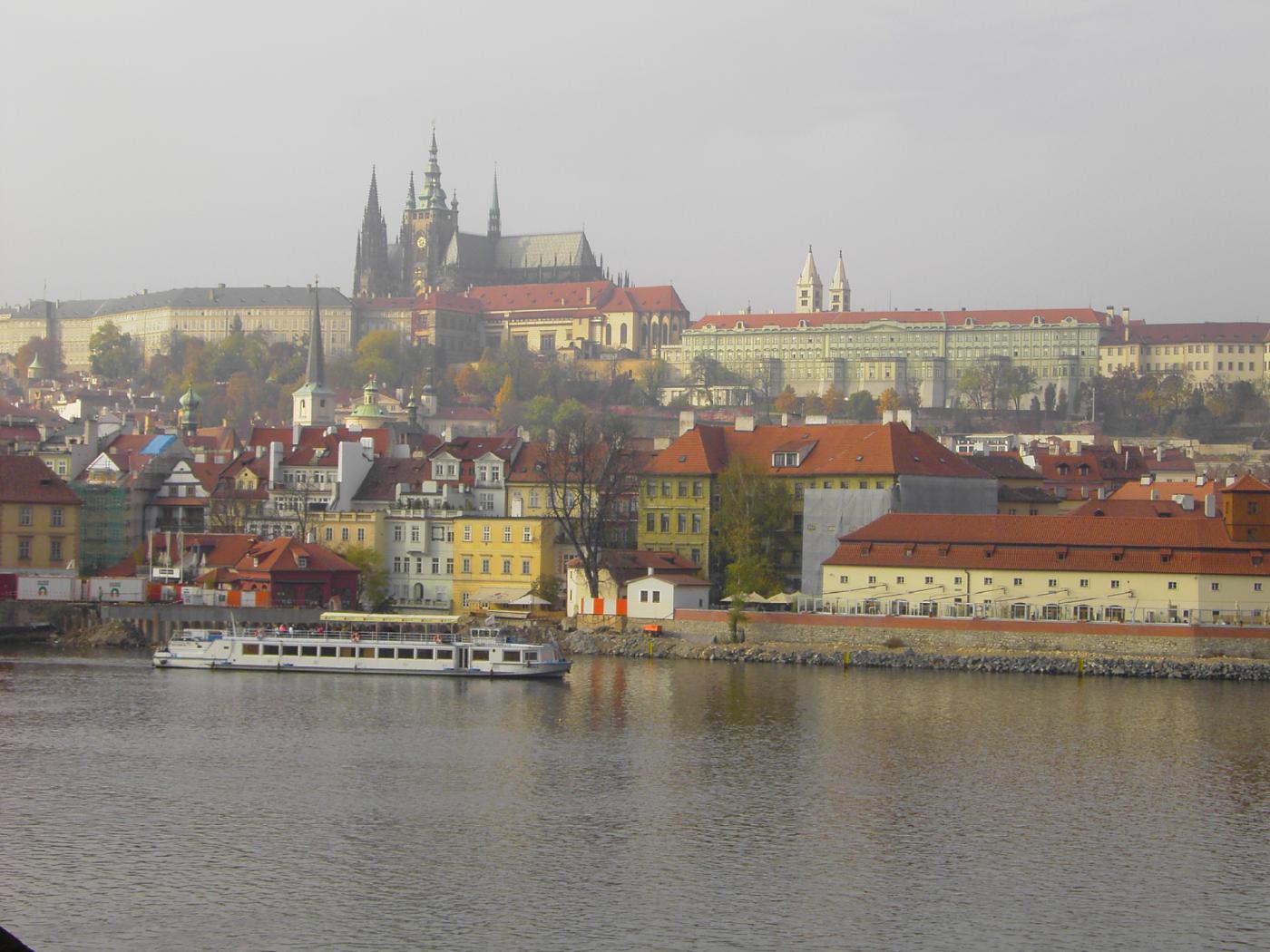
Many readers of these lines will undoubtedly question my sincerity: How can one, and this is certainly not an unjustified question, elevate such a rather “small” and “simple” work to the highest pedestal of the Czech musical Olympus, while at the same time simply ignoring much larger works by Smetana and other composers? That is certainly true. Nevertheless, the decision has been made, and I stand by it: Smetana's “Moldau” was the first musical work by a Czech composer that I ever heard. I still remember very well how, at a very young age, I listened to the enchanting melodies completely spellbound, even overwhelmed—probably without understanding the full dimension of the work, but nevertheless moved and full of awe at the deep impression of musical beauty. Only Mozart's Magic Flute, Beethoven's Ninth Symphony, and Wagner's Parsifal had a comparable effect on me, the latter work only many years later. I think it is no coincidence that there are only a few musical works worldwide that have achieved such a high degree of fame and popularity as this brilliant work by Smetana.
Even today, three decades after this extraordinary encounter, I still love this extremely melodic, lovingly folksy work very much. There are certainly few people who are not familiar with “The Moldau.” Nevertheless, the work deserves to be presented in more detail in this short discussion: The highly programmatic work describes the course of the Moldau, the river of the composer's Bohemian homeland, in delicate, sensitive musical images that flow gently into one another. Starting with the gentle trickling of the source, the river takes its course, accompanied by strings and woodwinds, echoing the movements of the rushing waves. The Moldau theme swells ever more powerfully until jubilant violins and woodwinds accompany the great river into the beautiful Bohemian countryside. On its way to beautiful Prague, the Moldau encounters many scenes and events that are reflected in wonderful pastoral melodies. You can hear the horns of a hunt or the merry bustle of a peasant wedding. Particularly enchanting is the musical description of a clear night as the backdrop to the fairy-tale sounds of diving nymphs. After a sometimes dramatic course through wild rapids, the river finally reaches its destination—the city of Prague. The Moldau melody sounds uniquely bright in major when it reaches the “golden city” and the castle, where the Moldau flows past as a calm, wide, and proud river.
The fact that the Visehrad theme from the tone poem of the same name from the same cycle appears reinforces the deep sense of Czech national pride that characterizes the work.
The Moldau is an expression of a musical movement that is also referred to as “national music.” It embodies the awakening national consciousness of the Czech people after centuries of foreign rule by the Habsburgs. I am fascinated by the beautiful melody and folk character of the work. Like the other pieces in the cycle “My Fatherland,” “The Moldau” testifies to the artist's pride and deep attachment to his Bohemian homeland. This is most clearly evident in the radiant, festive arrival of the Moldau in Prague.
For me, Smetana's “Moldau” is the epitome of Bohemian music and, at the same time, a musical expression of Czech genius. Now, dear readers, it has surely become clear to you why, despite my initial hesitation and uncertainty, I chose this particular work—indeed, why I had to choose it.
With this essay, I won the Radio Prague competition in 2004 and was able to visit Prague for a whole week in November with my wife Linda.
So: Which work by a Czech composer has impressed me the most? This question also requires thorough consideration and deliberation, but since I ultimately have to decide, I will choose Smetana's “Moldau” from the cycle “My Fatherland.” I would like to add that I do not want to make this difficult decision without paying respectful homage to the work of the great Antonin Dvorak and apologetically noting that his Ninth Symphony would be just as deserving of being named my favorite, as would the wonderfully melodic Cello Concerto or the fiery Slavonic Dances.
Many readers of these lines will undoubtedly question my sincerity: How can one, and this is certainly not an unjustified question, elevate such a rather “small” and “simple” work to the highest pedestal of the Czech musical Olympus, while at the same time simply ignoring much larger works by Smetana and other composers? That is certainly true. Nevertheless, the decision has been made, and I stand by it: Smetana's “Moldau” was the first musical work by a Czech composer that I ever heard. I still remember very well how, at a very young age, I listened to the enchanting melodies completely spellbound, even overwhelmed—probably without understanding the full dimension of the work, but nevertheless moved and full of awe at the deep impression of musical beauty. Only Mozart's Magic Flute, Beethoven's Ninth Symphony, and Wagner's Parsifal had a comparable effect on me, the latter work only many years later. I think it is no coincidence that there are only a few musical works worldwide that have achieved such a high degree of fame and popularity as this brilliant work by Smetana.
Even today, three decades after this extraordinary encounter, I still love this extremely melodic, lovingly folksy work very much. There are certainly few people who are not familiar with “The Moldau.” Nevertheless, the work deserves to be presented in more detail in this short discussion: The highly programmatic work describes the course of the Moldau, the river of the composer's Bohemian homeland, in delicate, sensitive musical images that flow gently into one another. Starting with the gentle trickling of the source, the river takes its course, accompanied by strings and woodwinds, echoing the movements of the rushing waves. The Moldau theme swells ever more powerfully until jubilant violins and woodwinds accompany the great river into the beautiful Bohemian countryside. On its way to beautiful Prague, the Moldau encounters many scenes and events that are reflected in wonderful pastoral melodies. You can hear the horns of a hunt or the merry bustle of a peasant wedding. Particularly enchanting is the musical description of a clear night as the backdrop to the fairy-tale sounds of diving nymphs. After a sometimes dramatic course through wild rapids, the river finally reaches its destination—the city of Prague. The Moldau melody sounds uniquely bright in major when it reaches the “golden city” and the castle, where the Moldau flows past as a calm, wide, and proud river.
The fact that the Visehrad theme from the tone poem of the same name from the same cycle appears reinforces the deep sense of Czech national pride that characterizes the work.
The Moldau is an expression of a musical movement that is also referred to as “national music.” It embodies the awakening national consciousness of the Czech people after centuries of foreign rule by the Habsburgs. I am fascinated by the beautiful melody and folk character of the work. Like the other pieces in the cycle “My Fatherland,” “The Moldau” testifies to the artist's pride and deep attachment to his Bohemian homeland. This is most clearly evident in the radiant, festive arrival of the Moldau in Prague.
For me, Smetana's “Moldau” is the epitome of Bohemian music and, at the same time, a musical expression of Czech genius. Now, dear readers, it has surely become clear to you why, despite my initial hesitation and uncertainty, I chose this particular work—indeed, why I had to choose it.
With this essay, I won the Radio Prague competition in 2004 and was able to visit Prague for a whole week in November with my wife Linda.